ServicesLegacy Planning
Legacy Planning in Hazlet
You worked for what you have. We help you decide who gets it, how and when. We check every account title and beneficiary form, look at life insurance and work with your attorney. Then we keep checking back so the plan still matches your family.
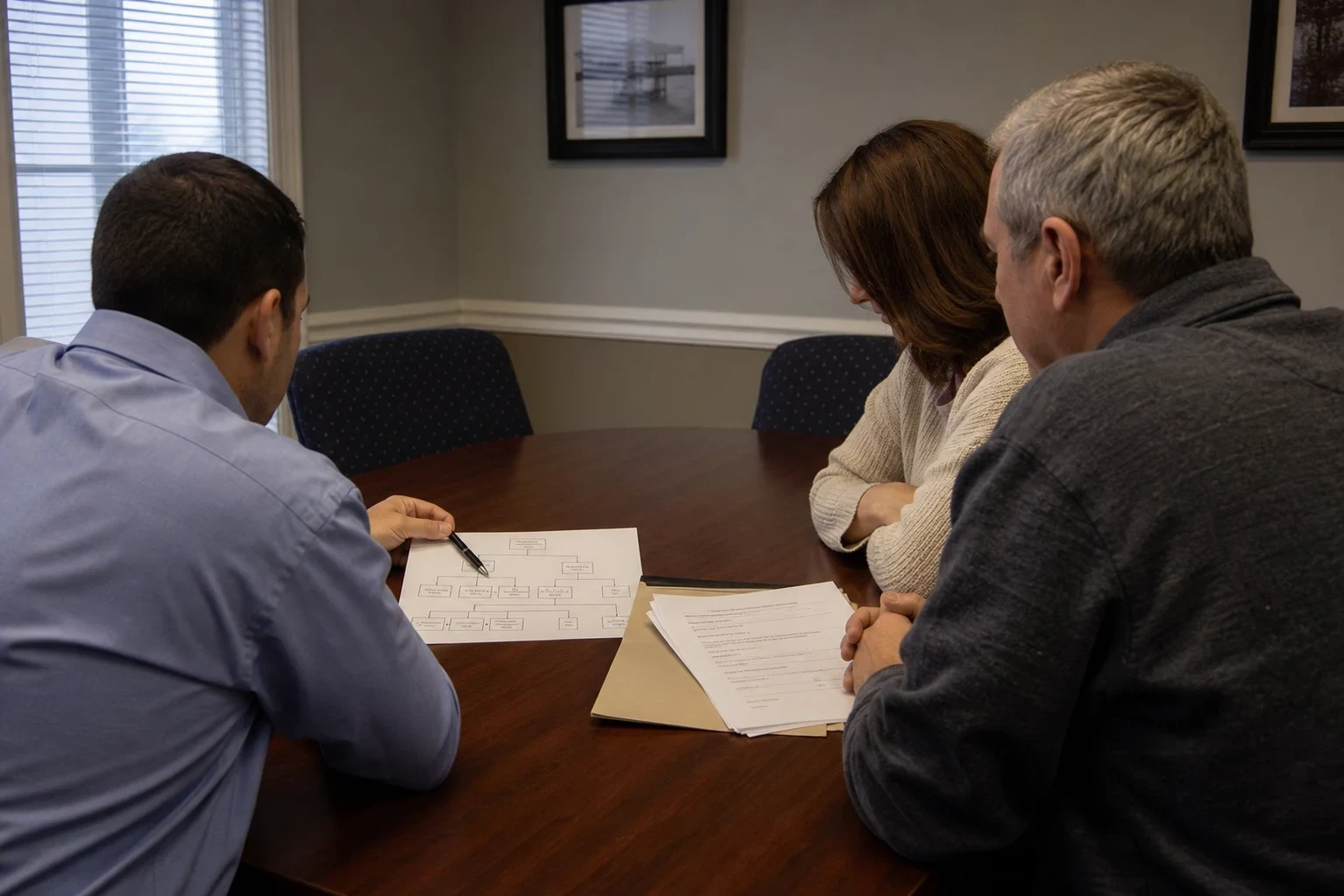
What legacy planning covers
A will is only part of it. Retirement accounts, life insurance and many bank accounts pass by beneficiary form, not by your will. If those forms are old or blank, the money can go to the wrong person or get stuck in probate. Legacy planning makes all the pieces point the same way.
We are not a law firm, so we do not draft wills or trusts. We handle the financial side. We find what you own and how it is titled, then help you fund the trusts your attorney sets up. Where life insurance fits, we can place it. Our advisor holds the Series 7 and the SIE and is licensed to sell life insurance.
Most plans go wrong years later, not on day one. A grandchild is born. A marriage ends. An account gets rolled over and the beneficiary drops off. So we do not hand you a binder and disappear. We check back after the work is done and tell you what to watch.
What the work includes
- Account and title inventory
- We list every account, policy and property you own and how each one is titled. This is often where the surprises are.
- Beneficiary review
- We pull the current beneficiary forms on your IRAs, 401(k)s, annuities and policies. We fix gaps, name contingent beneficiaries and make sure the forms match your wishes.
- Working with your attorney
- With your permission, we share the financial picture with your estate attorney. Once a trust is drafted, we help retitle accounts so the trust actually holds something.
- Life insurance for heirs
- Insurance can give heirs cash to cover costs, equal out an inheritance or keep a family business running. We show you whether it makes sense before anything is bought.
- Tax-aware gifting and transfers
- New Jersey still has an inheritance tax for some heirs, like siblings and nieces or nephews. We look at who gets what and coordinate with your tax preparer. Our Tax Management page covers more of that side.
- A written follow-up schedule
- You leave with a short list of what to review and when. We put the check-ins on our calendar too.
Signs it is time to work on your legacy plan
Your forms predate big life changes
If you married, divorced or had children since you last named beneficiaries, those forms may be wrong. An ex-spouse can still be listed.
You have a will but never retitled anything
A trust with no assets in it does not do much. This is one of the most common gaps we find.
You own a business
Someone needs to know what happens to it if you die or cannot work. Your family needs cash while that gets sorted out.
An heir needs extra care
A child with special needs or an adult child who struggles with money may need assets held in trust instead of handed over outright.
You are not sure what you own
Old 401(k)s from past jobs and small policies get lost. If you could not list them today, your family probably could not either.
How we work through it
- 1
Introductory meeting
The first talk can happen across a desk at our office, on a call or over video. You walk us through your family and what you want to happen. We explain our approach and how we get paid.
- 2
Gather and map
You bring statements, policies and any existing will or trust. We map who gets each asset today, so you can see the gaps on one page.
- 3
Fix and coordinate
We update beneficiary forms, retitle accounts and work with your attorney and tax preparer. If insurance is part of the plan, we lay out the options and costs before anything is bought.
- 4
Check back
Once the changes go through, we confirm each firm processed the paperwork. After that we sit down with you once a year, and any time your family changes.

What affects the cost
There is no single price for legacy planning. It depends on how much there is to sort out and how many people are involved. We go over how we are paid at the first meeting, before any work starts. Attorney fees are separate and paid to your attorney.
- Number of accounts
- Ten accounts at five firms take more time than three accounts in one place.
- Family setup
- Blended families, heirs with special needs or a family business take more planning.
- Trusts to fund
- Each trust means retitling accounts and paperwork with each firm that holds them.
- Insurance placed
- If you buy a policy through us, part of our pay may come from that policy. We tell you that up front.
Legacy planning questions
Something not covered here? (732) 334-6742
Do you write wills and trusts?
No. Only an attorney should draft those. We handle the money side and work with your attorney. If you do not have one, we can talk about what to look for.
Does my will override my beneficiary forms?
Usually not. Retirement accounts and life insurance normally go to whoever is named on the form, no matter what the will says. That is why we check every form.
Do I need life insurance in a legacy plan?
Not always. It helps when heirs will need cash fast, when you want to leave equal shares but one asset cannot be split, or when a business is involved. If you do not need it, we will say so.
How often should I review my plan?
We check in once a year. You should also call us after a birth, death, marriage, divorce, move or job change. Those are the times forms fall out of date.
Can we meet without coming to the office?
Yes. Many clients from Holmdel, Keyport and Middletown meet with us by phone or video. Documents can be shared securely.

Start with a conversation
Tell us about your family and what you want to leave behind. We will show you where your plan stands today and what we would check first.